Introduction
In today’s digital-first world, every business wants visibility online. Whether you are a local business owner, a freelancer, or a student entering the digital marketing field, understanding how online marketing channels work is no longer optional — it’s essential.
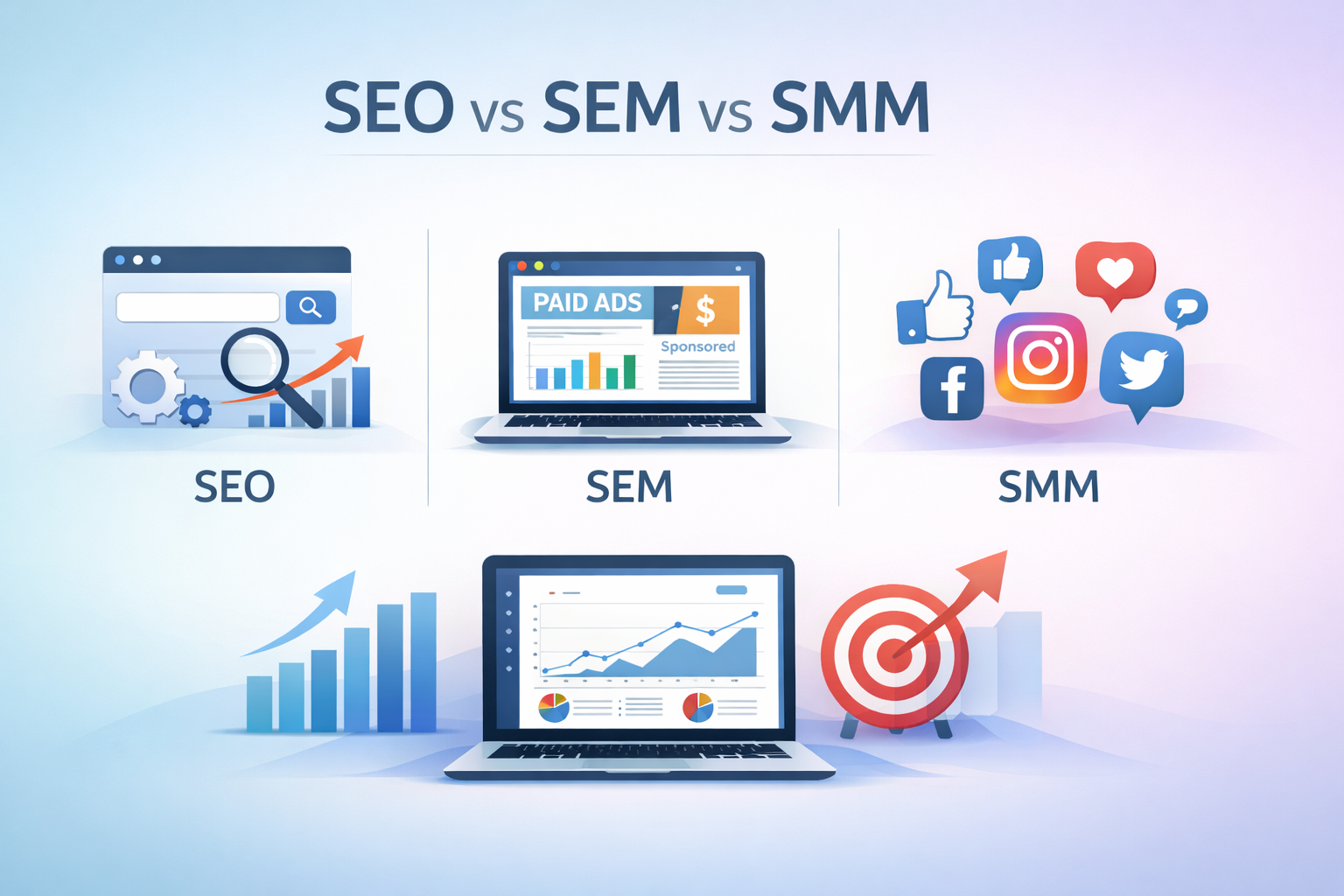
Three of the most important pillars of digital marketing are SEO, SEM, and SMM. While they may sound similar, they serve completely different purposes in a marketing strategy. Many businesses struggle because they either invest in the wrong channel or expect results that don’t align with how these strategies actually work.
Businesses often struggle with digital marketing because of unclear strategy and unrealistic expectations. Many invest heavily in ads without proper planning, leading to poor returns, while others abandon SEO too early expecting quick results. In reality, each channel works differently and requires the right approach and timeline. This guide explains how SEO, SEM, and SMM function, when to use each, and how to combine them effectively for consistent growth.
What is SEO (Search Engine Optimization)?
SEO is the process of optimizing your website so that it appears in the organic (non-paid) results on search engines like Google Search. Unlike paid advertising, SEO focuses on building long-term visibility by improving your website’s relevance and authority.
When a user searches for something, Google scans millions of pages and ranks them based on factors like content quality, relevance, and trust. SEO is all about aligning your website with these ranking factors.
Example (Real-World Perspective)
If someone searches “best digital marketing course in Thane” and your website appears on the first page without running ads, that traffic is coming through SEO. This means your content, website structure, and authority are strong enough for Google to trust your site.
How SEO Works in Practice
SEO is not just about adding keywords. It is a combination of multiple activities working together.
On-Page SEO (Content & Structure)
This involves optimizing everything inside your website. It includes writing high-quality content, placing keywords naturally, structuring headings properly, and ensuring the page answers the user’s intent.
For example, if you write a blog on “SEO vs SEM vs SMM,” your content should clearly explain the differences, include examples, and answer common questions users might have.
Off-Page SEO (Authority Building)
Off-page SEO focuses on building trust through external signals. The most important factor here is backlinks — when other websites link to your content.
For instance, if a reputed blog links to your article, Google sees it as a sign of credibility, which can improve your rankings.
Technical SEO (Performance & Experience)
Technical SEO ensures your website is easy for search engines to crawl and for users to navigate. This includes website speed, mobile responsiveness, secure browsing (HTTPS), and proper indexing.
A slow website or broken pages can negatively impact rankings, no matter how good your content is.
Benefits of SEO
SEO is one of the most powerful long-term strategies in digital marketing. While it takes time, the results are sustainable.
- You get consistent traffic without paying for each click
- It builds trust because users prefer organic results
- It improves brand authority in your niche
- It generates high-quality leads over time
However, SEO requires patience and continuous effort. It is not a one-time task but an ongoing process.
What is SEM (Search Engine Marketing)?
SEM refers to paid marketing strategies used to increase visibility on search engines, primarily through platforms like Google Ads. Unlike SEO, where results take time, SEM allows you to appear at the top of search results instantly.
This is especially useful for businesses that need quick leads or are launching a new product or service.
How SEM Works (Practical Explanation)
In SEM, you bid on keywords that your target audience is searching for. When someone enters that keyword, your ad appears at the top of the search results.
You only pay when someone clicks on your ad. This is known as Pay-Per-Click (PPC).
Example
If you run ads for the keyword “digital marketing course near me,” your ad will appear above organic results. This increases your chances of getting clicks and leads immediately.
Why Businesses Use SEM
From experience, SEM is often used when:
- A business needs immediate visibility
- There is high competition in organic search
- A product or service is newly launched
- Quick testing of offers or landing pages is required
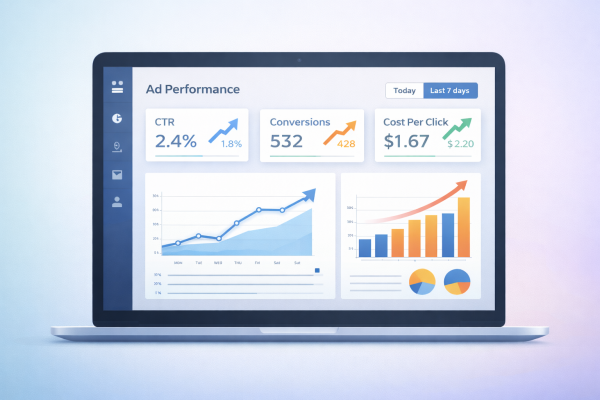
SEM provides instant data, which helps marketers understand what works and what doesn’t.
Benefits of SEM
- Immediate traffic and leads
- Highly targeted audience based on location, device, and intent
- Easy to measure and optimize campaigns
- Full control over budget and spending
However, SEM stops delivering results as soon as you stop spending money. That’s why it works best when combined with SEO.
What is SMM (Social Media Marketing)?
SMM is the process of promoting your business using social media platforms like Instagram, Facebook, and LinkedIn.
Unlike SEO and SEM, which focus on search intent, SMM focuses on audience engagement, brand awareness, and relationship building.
How SMM Works in Real Life
People don’t usually open Instagram to search for services. They scroll for content. This means your strategy should focus on attracting attention and building trust.
For example, a digital marketing institute can:
- Share student success stories
- Post educational reels
- Run polls and interactive content
- Use ads to generate leads
Over time, this builds brand familiarity and trust, which influences purchase decisions.
Organic vs Paid SMM
Organic SMM involves posting content regularly and engaging with your audience. It takes time but helps build a loyal community.
Paid SMM involves running ads to reach a larger audience quickly. This is useful for lead generation and promotions.
Benefits of SMM
- Direct communication with your audience
- Strong brand identity and recall
- Potential for viral reach
- Supports other marketing channels like SEO
SEO vs SEM vs SMM
| Factor | SEO | SEM | SMM |
|---|---|---|---|
| Purpose | Rank organically | Get instant visibility | Build brand & engagement |
| Time to Result | Slow | Immediate | Moderate |
| Investment | Time & effort | Paid budget | Time + optional ads |
| Trust Level | High | Medium | High (if consistent) |
| Scalability | Long-term | Budget-dependent | Content-driven |
How to Combine SEO, SEM, and SMM
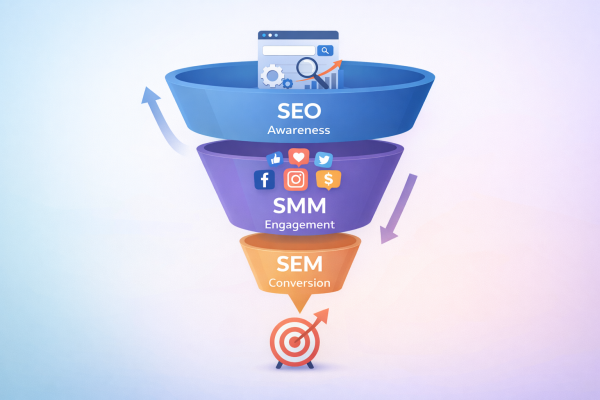
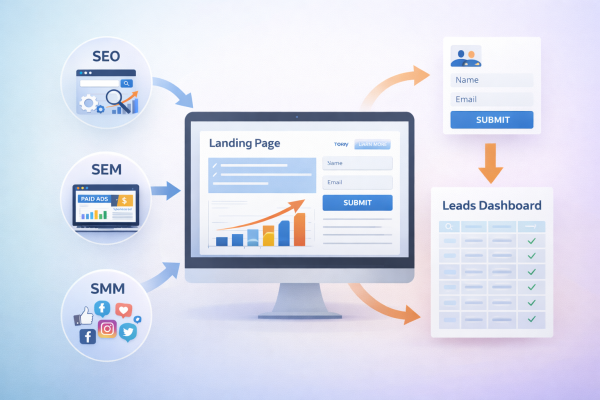
The most successful businesses don’t rely on just one channel. They build a system where all three work together.
Step-by-Step Strategy
Start with SEM to generate quick leads and understand which keywords convert best. Use this data to build your SEO strategy by creating content around high-performing keywords.
At the same time, use SMM to distribute your content, engage with your audience, and build trust. Social media also helps drive traffic to your website, indirectly supporting SEO.
Common Mistakes
Many businesses fail not because of lack of effort, but because of wrong expectations or poor execution.
One common mistake is expecting SEO to deliver results in a few weeks. SEO takes time, and stopping midway wastes all efforts.
Another mistake is running ads without a proper landing page. Even if you get clicks, poor landing page design leads to low conversions.
Ignoring social media engagement is also a big issue. Posting content without interacting with your audience reduces effectiveness.
FAQs
SEO focuses on organic traffic, SEM on paid ads, and SMM on social media engagement and promotion.
Beginners can start with SMM for visibility and SEM for quick results, while gradually building SEO.
Yes, even with a small budget, combining all three can give better results than relying on one.
SEO is better for long-term growth, while Google Ads is better for immediate traffic and leads.
Organic SMM can take 1–3 months, while paid ads can generate results within days.
Conclusion
SEO, SEM, and SMM are three essential pillars of digital marketing, each serving a different purpose in driving online growth. SEO focuses on building long-term visibility and trust through organic rankings. SEM delivers immediate results by placing your business at the top of search results through paid ads. SMM helps create brand awareness, engage audiences, and build lasting relationships.
Relying on only one channel can limit growth and impact overall performance. A well-balanced strategy that combines SEO for consistency, SEM for quick results, and SMM for engagement creates a more effective and sustainable digital presence.
For businesses and individuals looking to succeed online, understanding how these three work together is key. When used strategically, they not only increase traffic but also improve lead generation, conversions, and brand credibility over time.