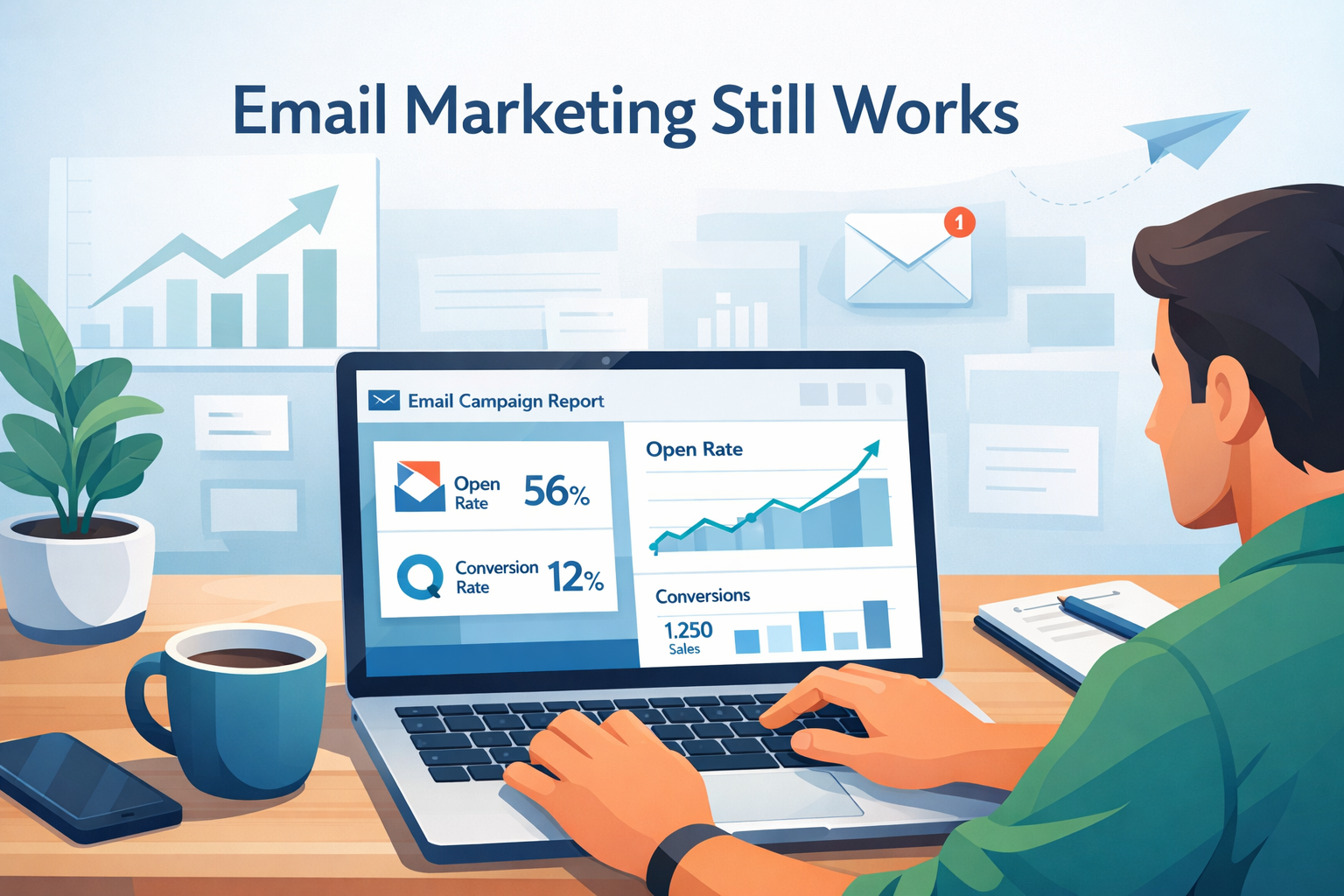
Introduction: “Email Is Dead” — Then Why Is It Still Making Money?
Every few years, email marketing is declared obsolete.
First, social media was supposed to replace it.
Then paid ads took over.
More recently, AI tools entered the conversation.
Yet despite all of this, email continues to do one thing consistently—generate leads, sales, and repeat customers.
Channels evolve. Algorithms change. Tools come and go.
But email remains one of the most reliable and controllable digital marketing channels when executed with the right strategy.
This isn’t based on assumptions or trends.
It’s backed by real campaign data, proven use cases, and measurable business outcomes across multiple industries.
Let’s break the myth and look at why email marketing still works—and why businesses that ignore it lose revenue they never see coming.
Why Email Marketing Still Works (Even in 2026)
Email works because it solves three problems that most channels don’t:
1. You Own the Audience
Social platforms can throttle reach. Ads can get expensive overnight.
Email? You own that list.
No algorithm decides whether your message gets seen.
2. It Reaches People at Decision Time
Email lands in a personal space—where people check invoices, updates, and offers.
That’s intent-rich real estate.
3. It Supports the Full Funnel
From first interaction to repeat purchase, email supports:
-
Education
-
Trust building
-
Follow-ups
-
Upsells
-
Retention
Not just one stage—the entire customer journey.
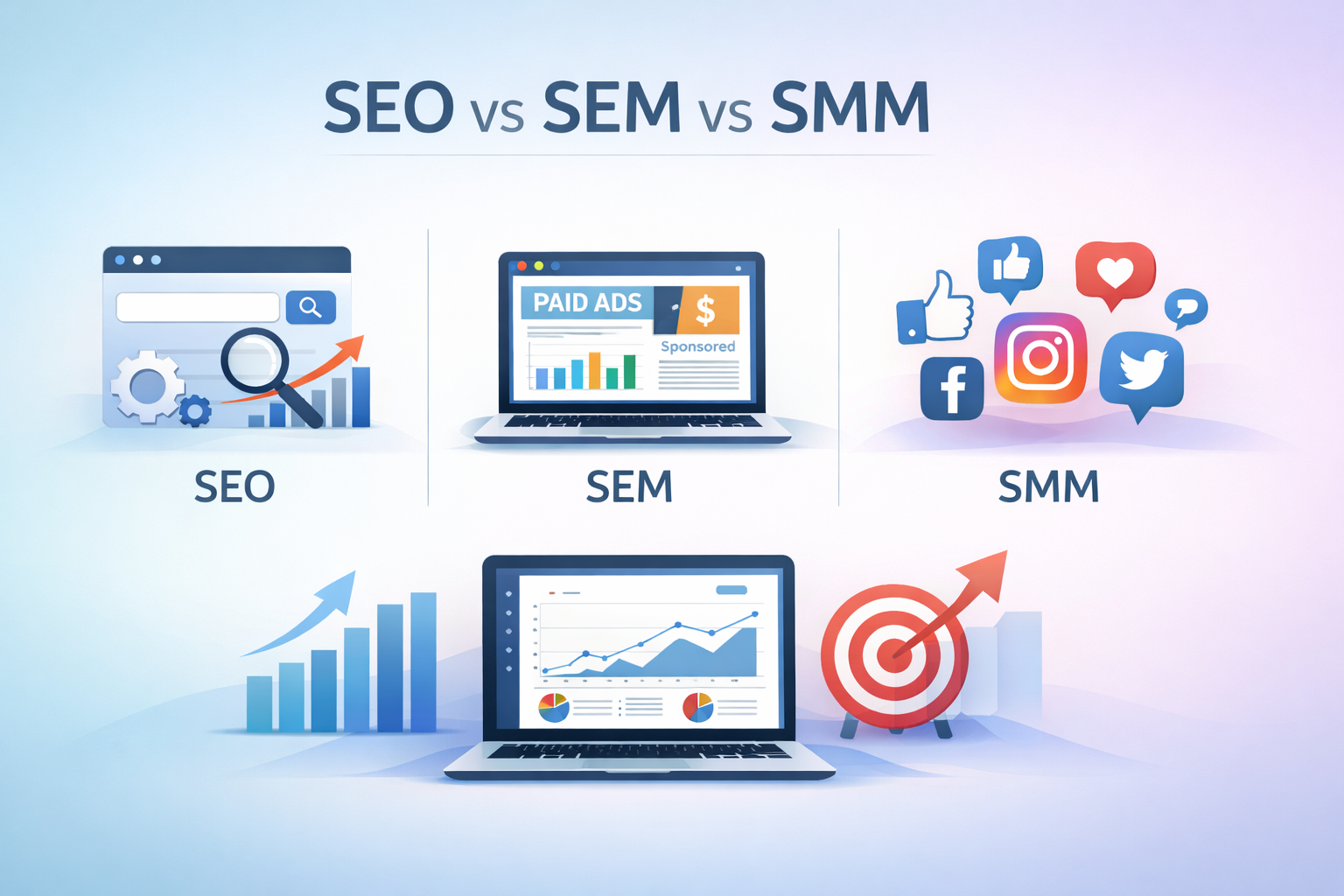
Email Marketing vs Other Channels (Reality Check)
| Channel | Control | Cost Stability | Conversion Quality |
|---|---|---|---|
| Social Media | Low | Unstable | Medium |
| Paid Ads | Medium | High volatility | High (short-term) |
| SEO | Medium | Stable | High (long-term) |
| Email Marketing | High | Very Stable | Very High |
Email doesn’t replace other channels.
It multiplies their effectiveness.
Real Example #1: Coaching Institute Lead Nurturing
The Problem
Leads were coming from Google Ads and Instagram, but:
-
70% didn’t convert immediately
-
Follow-up calls were ignored
-
Sales team blamed “low-quality leads”
The Fix
We implemented a 7-day email nurturing sequence:
-
Day 1: Welcome + course clarity
-
Day 3: Student result breakdown
-
Day 5: Common doubts & objections
-
Day 7: Limited batch reminder
The Result
-
Lead-to-enrolment rate increased by 38%
-
Cost per acquisition dropped without touching ad spend
-
Sales calls became shorter and more focused
Email didn’t replace ads—it made ads profitable.
Why Most Businesses Fail at Email Marketing
Email doesn’t fail.
Bad email strategy fails.
Here’s what usually goes wrong:
-
Sending only discounts and promotions
-
No segmentation (everyone gets the same email)
-
Long, boring paragraphs
-
No clear next action
-
Inconsistent sending
Email is not about volume.
It’s about relevance + timing.
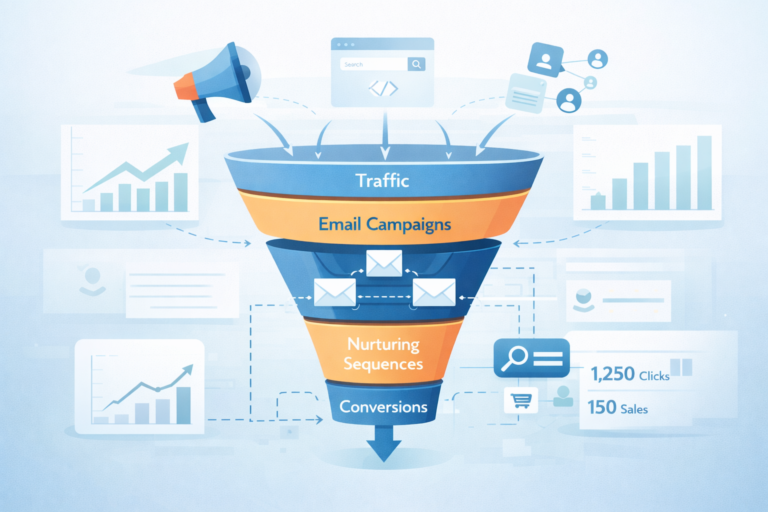
The Email Funnel That Actually Converts
Stage 1: Welcome & Trust
Purpose: Set expectations and establish credibility.
Emails here should:
-
Clarify who you help
-
Explain what value you offer
-
Build familiarity
Stage 2: Education & Proof
Purpose: Reduce hesitation.
Include:
-
Use cases
-
Results
-
Mistakes to avoid
-
Behind-the-scenes insights
Stage 3: Conversion
Purpose: Ask clearly.
-
Clear offer
-
Clear deadline
-
Clear next step
Stage 4: Retention
Purpose: Increase lifetime value.
-
Tips
-
Updates
-
Upsells
-
Referral nudges
Real Example #2: Service Business Follow-Up Automation
The Problem
A local service business received website enquiries but:
-
Many prospects went silent
-
Follow-ups depended on manual calls
-
Leads got cold fast
The Fix
We added automated email follow-ups:
-
Instant enquiry acknowledgment
-
Case study email after 24 hours
-
Reminder email after 72 hours
The Result
-
42% increase in response rate
-
Faster decision-making
-
Higher trust before the first call
People didn’t need more calls.
They needed better information at the right time.
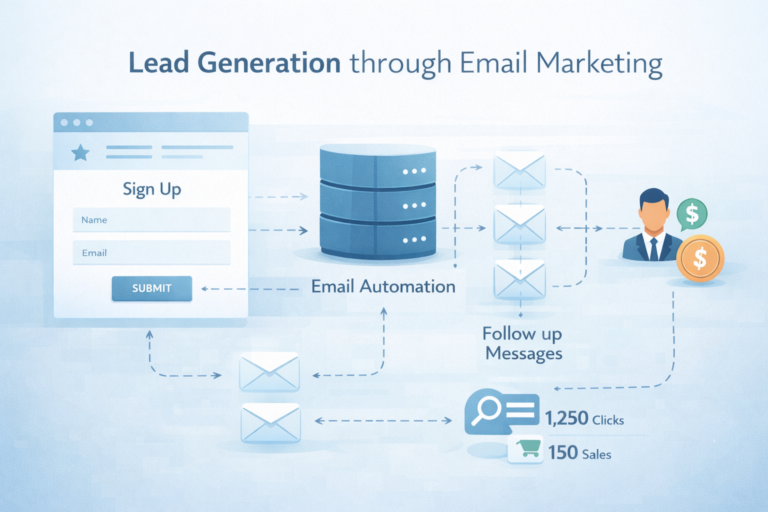
Email Personalisation: What Actually Works
Forget fancy AI tricks.
Simple personalisation performs best:
-
First name in subject line
-
Content based on user interest
-
Different emails for cold vs warm leads
Example:
-
New subscriber → education
-
Demo attendee → pricing clarity
-
Past customer → upgrade or referral
This alone can improve open and click rates without changing copy quality.
Subject Lines That Get Opened (Without Clickbait)
From real campaigns, these patterns work consistently:
-
Clear benefit
-
Curiosity without tricks
-
Problem-aware phrasing
Examples:
-
“Why most ads stop working after 30 days”
-
“This mistake costs businesses 2x more leads”
-
“Before you increase ad budget, read this”
If your subject line sounds like spam, it will be treated like spam.
Real Example #3: E-commerce Repeat Sales
The Problem
Customers bought once and disappeared.
The Fix
Email flows added:
-
Order follow-up tips
-
Usage reminders
-
Cross-sell suggestions
-
Review requests
The Result
-
Repeat purchases increased by 31%
-
Lower dependency on ads
-
Better brand recall
Retention is cheaper than acquisition.
Email makes retention scalable.
Email Marketing Metrics That Actually Matter
Forget vanity metrics alone.
Focus on:
-
Click-through rate (engagement quality)
-
Replies (intent signal)
-
Conversions per campaign
-
Revenue per subscriber
Open rates fluctuate.
Sales don’t lie.
When Email Marketing Makes the Most Sense
Email works best if you have:
-
Lead forms
-
Downloads
-
Webinars
-
Enquiries
-
Past customers
If you’re running ads or SEO without email, you’re leaking money.
Common Myths That Need to Die
Myth: People don’t read emails
Reality: People ignore irrelevant emails
Myth: WhatsApp is better
Reality: WhatsApp is intrusive; email is intentional
Myth: Email is old-school
Reality: Old doesn’t mean ineffective—profitable systems last
FAQs
Yes. Email remains one of the highest ROI digital marketing channels when used for nurturing, follow-ups, and retention.
Coaching, SaaS, e-commerce, service businesses, B2B, and local businesses all see strong results.
Consistency matters more than frequency. Weekly or bi-weekly works best for most brands.
Indirectly, yes. Email improves engagement, brand searches, and conversion rates from paid and organic traffic.
Absolutely. It’s cost-effective, scalable, and doesn’t depend on ad budgets.
Conclusion: Email Isn’t Outdated — It’s Underused
Email marketing hasn’t stopped working.
What has changed is how it needs to be used.
Businesses that rely only on ads, social media, or SEO often struggle with rising costs and inconsistent conversions. Email fills that gap by turning traffic into relationships and leads into customers—at scale.
When done correctly, email marketing:
-
Improves conversion rates across all channels
-
Reduces dependency on paid ads
-
Increases customer lifetime value
-
Creates predictable revenue systems
The proof is clear across coaching, SaaS, e-commerce, service businesses, and B2B brands. Email continues to deliver because it operates in a space where attention, intent, and trust already exist.
Ignoring email doesn’t make a marketing strategy modern.
It makes it incomplete.
Businesses that treat email as a core growth channel—not an afterthought—consistently outperform those that don’t.