Introduction
Every website owner wants one thing — more visitors to their website.
But the real question is not just about getting traffic. The important question is:
Where is your website traffic coming from?
Some users find your website naturally through Google search results, while others arrive after clicking advertisements on search engines or social media platforms.
These two traffic sources are called:
Organic Traffic
Paid Traffic
Understanding the difference between these two is essential for businesses because the strategy you choose will directly affect:
Website growth
Lead generation
Marketing cost
Brand visibility
Customer acquisition
Many businesses rely heavily on advertisements but ignore SEO, while others depend only on SEO and miss opportunities for faster growth through ads.
The truth is:
– The most successful websites use a combination of both organic and paid traffic strategies.
In this detailed guide, we will explain:
What website traffic means
What organic traffic is
What paid traffic is
Key differences between them
When to use each strategy
How businesses combine both to grow online
What is Website Traffic?
Website traffic refers to the number of people visiting your website.
Every time someone lands on your website, it counts as a website visit or session.
Traffic can come from multiple sources such as:
| Traffic Source | Explanation |
|---|---|
| Organic Traffic | Visitors coming from search engines like Google |
| Paid Traffic | Visitors coming from online ads |
| Direct Traffic | Visitors typing your website URL directly |
| Referral Traffic | Visitors coming from other websites |
| Social Media Traffic | Visitors coming from social platforms |
For business websites, organic traffic and paid traffic are the two most important sources because they directly help generate leads and customers.
Understanding these traffic sources helps businesses:
Identify where customers are coming from
Improve marketing strategies
Increase conversions
Optimize advertising budgets
What is Organic Traffic?
Organic traffic refers to visitors who reach your website through unpaid search engine results.
When someone searches on Google and clicks a website that is not marked as an advertisement, it is considered organic traffic.
For example, a user searches:
“What is digital marketing?”
Google shows a list of websites. When the user clicks one of those websites, the visit is called organic traffic.
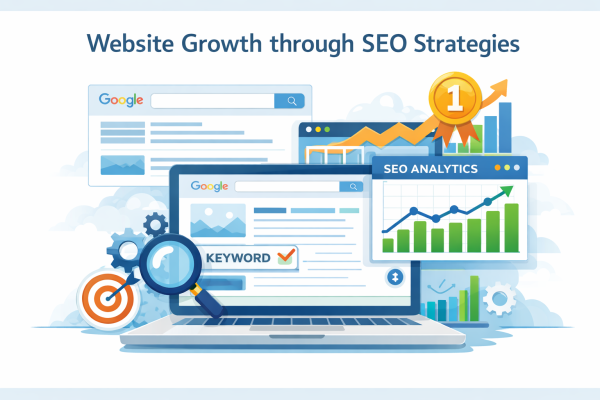
This traffic is generated through a process called Search Engine Optimization (SEO).
How Organic Traffic Works
Organic traffic is the result of improving your website so that search engines can easily understand and rank your content.
Search engines like Google use algorithms to analyze:
-
Website content
-
Keywords
-
Website structure
-
User experience
-
Backlinks
-
Page loading speed
If your website provides valuable and relevant information, Google is more likely to show it in search results.
The higher your website appears on the search results page, the more organic traffic it receives.
For example:
| Google Position | Estimated Click Rate |
|---|---|
| Position 1 | 25–35% |
| Position 2 | 15–20% |
| Position 3 | 10–15% |
| Position 4–10 | 2–8% |
This is why SEO focuses heavily on ranking websites in the top positions.
What is Paid Traffic?
Paid traffic refers to visitors who reach your website through advertisements.
Businesses pay advertising platforms to display their website to a targeted audience.
Common platforms used for paid traffic include:
Google Ads
Facebook Ads
Instagram Ads
LinkedIn Ads
YouTube Ads
When users click these advertisements and visit the website, the traffic generated is called paid traffic.
How Paid Traffic Works
Paid traffic operates through advertising systems where businesses bid on keywords or target specific audiences.
For example, if someone searches:
“Digital marketing course near me”
Google may show advertisements at the top of the results page.
These advertisements appear above organic results and are marked as Sponsored.
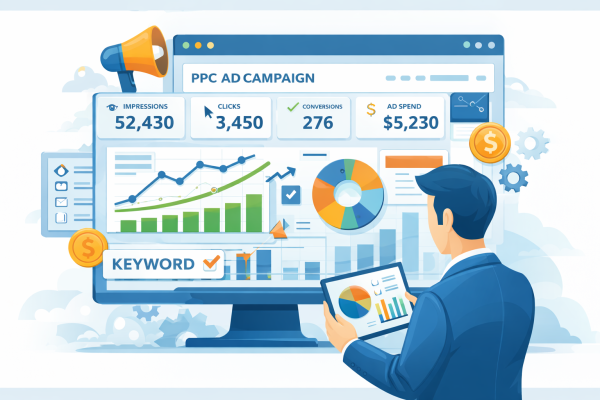
Businesses pay every time someone clicks the advertisement. This model is known as Pay-Per-Click (PPC).
Types of Paid Traffic
1) Search Ads
Search ads appear directly on search engines like Google when users search for specific keywords.
These ads are highly effective because users already have high intent.
2) Social Media Ads
Platforms like Facebook and Instagram allow businesses to target users based on:
- Interests
- Age
- Behavior
- Location
- Profession
These ads are often used for brand awareness and lead generation.
3) Display Ads
Display ads appear as banner advertisements across websites in Google’s advertising network.
They help increase brand visibility.
4) Video Ads
Video ads run on platforms like YouTube.
These ads are effective for storytelling and product promotion.
Benefits of Paid Traffic
1) Immediate Results
Paid campaigns can start generating visitors within minutes of launching ads.
2) Targeted Audience
Advertising platforms allow businesses to reach very specific audiences.
For example:
People searching for courses
People interested in marketing
People located in a specific city
3) Fast Lead Generation
Businesses that need quick inquiries or sales often use paid advertising.
4) Campaign Control
Paid campaigns allow full control over:
Budget
Target audience
Ad messaging
Campaign duration
Limitations of Paid Traffic
Paid traffic also comes with certain challenges.
Traffic stops when ads stop
Costs increase with competition
Requires regular campaign optimization
Poor targeting may waste budget
Because of this, businesses treat paid traffic as a short-term growth accelerator.
Organic Traffic vs Paid Traffic: Detailed Comparison
| Factor | Organic Traffic | Paid Traffic |
|---|---|---|
| Cost | Free clicks | Pay per click |
| Speed | Slow but sustainable | Instant results |
| Sustainability | Long-term | Temporary |
| Trust | High user trust | Moderate |
| Control | Limited | Full control |
| Scalability | Depends on SEO | Depends on budget |
Both strategies play different roles in digital marketing.
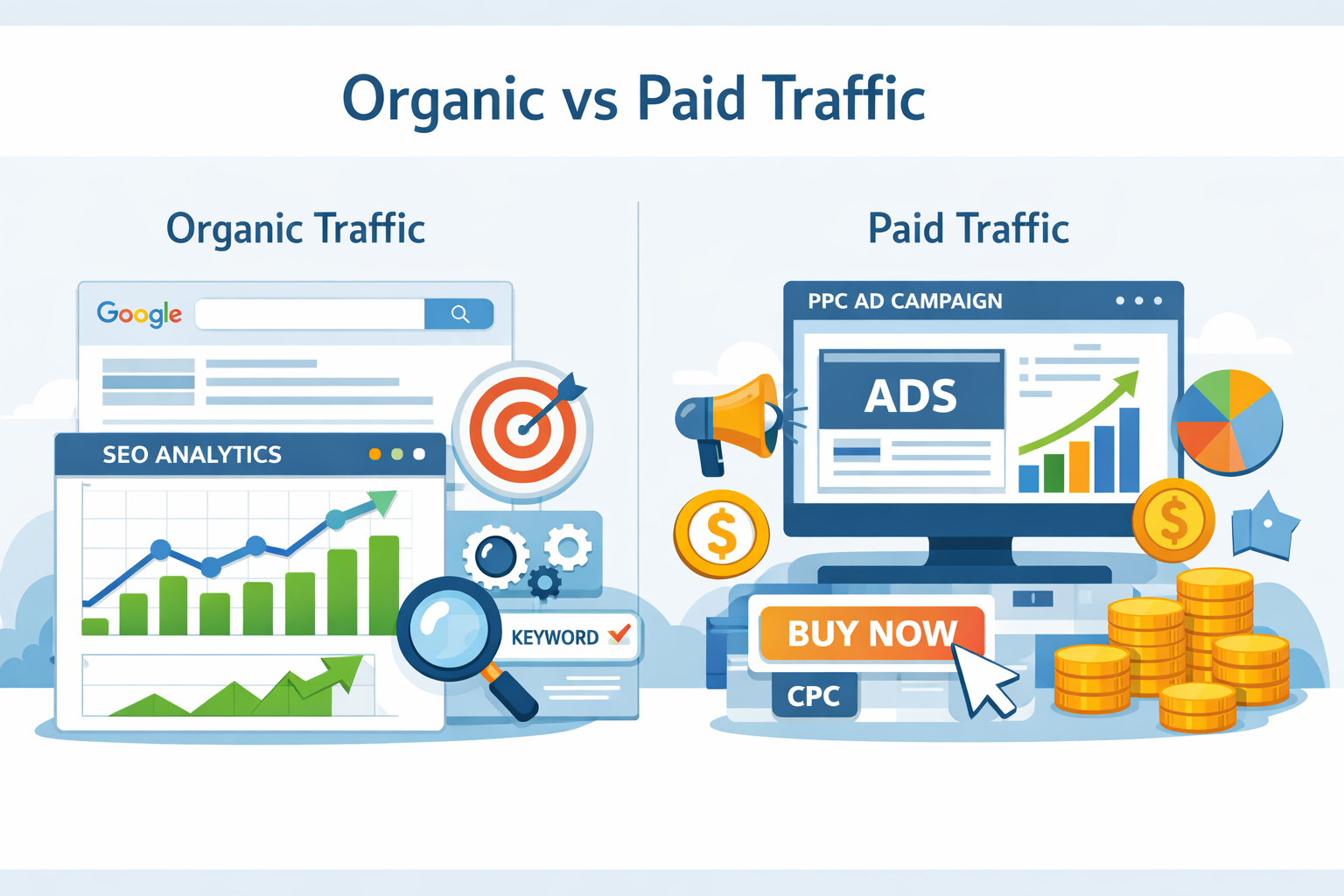
Organic traffic builds long-term online presence, while paid traffic helps achieve immediate business goals.
When Should Businesses Focus on Organic Traffic?
Businesses should prioritize organic traffic when they want to build long-term digital growth.
Situations where SEO is most beneficial include:
Building brand authority
Generating consistent website visitors
Educating customers through blogs
Reducing marketing cost over time
Content marketing combined with SEO allows businesses to attract visitors who are actively searching for information.
When Should Businesses Use Paid Traffic?
Paid traffic is ideal when businesses need fast visibility.
Common scenarios include:
Launching new products
Promoting limited-time offers
Getting quick leads
Testing marketing strategies
Increasing brand awareness
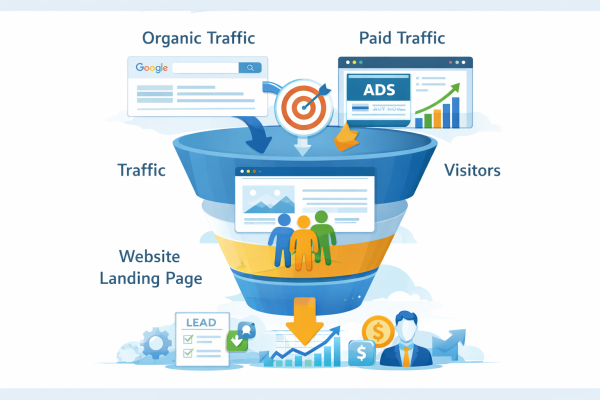
Paid advertising can quickly drive targeted visitors to landing pages designed for conversion.
Best Strategy for Businesses: Combining Organic and Paid Traffic
The most effective digital marketing strategies combine both traffic sources.
A balanced approach might look like this:
Run paid ads to generate immediate leads.
Invest in SEO and content marketing.
Use data from paid campaigns to discover profitable keywords.
Create blog content targeting those keywords.
Over time, organic traffic grows and reduces dependency on advertising budgets.
This combination creates both short-term and long-term growth.
FAQs
Organic traffic refers to visitors who reach a website through unpaid search engine results after searching for specific keywords.
Paid traffic refers to website visitors who arrive through advertisements such as Google Ads, social media ads, or display advertising.
Organic traffic is better for long-term growth, while paid traffic is useful for quick results. Most businesses benefit from using both strategies.
SEO usually takes 3 to 6 months before significant organic traffic growth becomes visible.
Paid ads do not directly improve SEO rankings, but they can increase website visibility and help discover high-performing keywords.
Conclusion
Understanding organic vs paid traffic is essential for building a successful online marketing strategy.
Organic traffic builds long-term visibility through search engines, while paid traffic delivers immediate visitors and faster lead generation.
Businesses that combine both strategies create a sustainable system that attracts customers consistently.
Investing in SEO while using paid advertising strategically allows websites to grow steadily and compete effectively in the digital marketplace.